A nerve cell can remain electrically quiet while spending energy every second. Ions slip across its membrane, and transport proteins move them back. Far away in the same cell, molecular motors carry vesicles along thin internal tracks. In a muscle cell, other motors pull on protein filaments. These activities look different, but many draw on the same small molecule: adenosine triphosphate, or ATP.
It is common to call ATP the cell’s energy currency. That is a convenient shorthand, not a description of a substance that simply burns when a phosphate bond breaks. To understand the molecule, it helps to follow a particular job, the chemistry that makes the job possible, and the pathways that replace ATP as fast as the cell uses it.
What ATP is made of
ATP contains adenine, a ribose sugar, and three phosphate groups. When a cell uses ATP, an enzyme often couples its conversion to adenosine diphosphate (ADP) and inorganic phosphate to another reaction. The products of ATP hydrolysis are more favorable under typical cellular conditions; the overall reaction has a negative change in Gibbs free energy. The amount depends on temperature, concentrations and the chemical environment, not on a universal fixed number printed next to the molecule.
Breaking a chemical bond by itself takes energy. The useful free-energy change arises from the whole hydrolysis reaction, including new interactions and the stability of its products. This matters because a textbook explanation that says energy is ‘stored in the last phosphate bond’ can leave the wrong impression. ATP is valuable because enzymes have evolved ways to couple a favorable reaction to work that otherwise would not proceed readily. A detailed account of cellular metabolic energy explains this thermodynamic distinction.
The sodium–potassium pump: a complete example
Consider the sodium–potassium ATPase in the plasma membrane of many animal cells. In a typical cycle it exports three sodium ions and imports two potassium ions while hydrolyzing one ATP molecule. The ions move against electrochemical gradients; they do not simply diffuse through an open pore. The pump binds ions, changes shape as ATP is used, releases them on the opposite side, then returns to a configuration that can begin another cycle.
This steady maintenance of ion gradients underlies nerve impulses, nutrient transport and aspects of cell volume control. An action potential depends on ions moving through channels, while ATP-dependent transport helps restore and sustain the conditions needed for future signaling. ATP therefore does not directly generate every electrical event; it maintains much of the physical and chemical background that makes those events possible.
The same principle appears in calcium pumps. Following a muscle contraction, calcium must be moved back into internal stores so that the contractile machinery can relax. Some of that transport is ATP-dependent. A shortage of ATP can therefore interfere with both the work phase and the recovery phase of a cell’s activity.
How mitochondria rebuild the supply
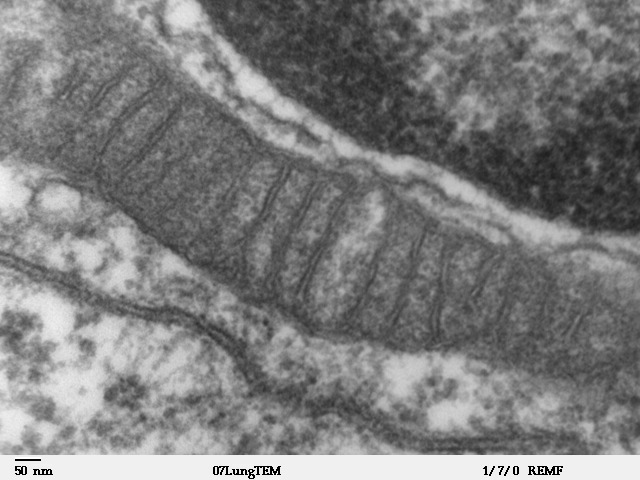
Many animal cells make a large share of their ATP through oxidative phosphorylation in mitochondria. Food-derived molecules are gradually oxidized through metabolic pathways. Their electrons are carried by molecules such as NADH and transferred through protein complexes in the inner mitochondrial membrane. As electrons pass through the respiratory chain, several complexes move protons from the matrix toward the intermembrane space.
The membrane holds an electrochemical gradient: protons differ in concentration and electrical potential across it. ATP synthase provides a controlled pathway for protons to move back. Parts of the enzyme rotate as protons flow, and the enzyme uses the resulting mechanical and chemical changes to join ADP with inorganic phosphate. It is more accurate to picture an energy-converting molecular machine than a little furnace. OpenStax’s account of oxidative phosphorylation includes the relevant membrane arrangement and proton flow.
Oxygen is essential to this aerobic pathway because it serves as the final electron acceptor at the end of the respiratory chain. If oxygen delivery or the chain itself is compromised, mitochondrial ATP production may fall. The exact response depends on the cell, how long the disruption lasts, and which other metabolic options are available.
Not every ATP molecule comes from mitochondria
Glycolysis takes place in the cytosol and yields a net two ATP molecules per glucose molecule through substrate-level phosphorylation. It does not directly require oxygen, although the cell must regenerate the cofactors needed to keep glycolysis running. During strenuous activity, this pathway can increase its contribution to ATP regeneration. It does not wait for mitochondria to ‘switch off’: the pathways operate together, with their relative shares changing under different conditions.
Organisms use additional routes. Some microorganisms generate ATP through fermentation or respiration that uses electron acceptors other than oxygen. Photosynthetic organisms can make ATP using proton gradients generated by light-driven electron transport. In plants, chloroplast ATP primarily supports processes within the chloroplast, while mitochondria and other pathways continue to have important metabolic roles.
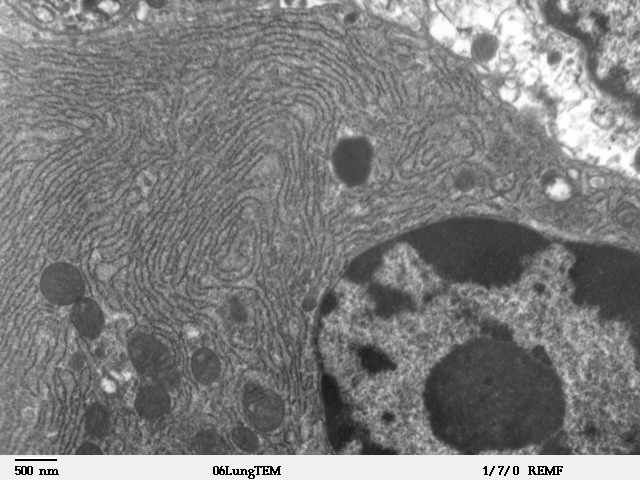
Even within one animal tissue, different cells are not identical. Red blood cells in humans lack mitochondria and rely on glycolysis for ATP, whereas heart muscle relies heavily on aerobic metabolism. A single diagram of a mitochondrion cannot stand in for the whole story of ATP production.
Why the pool must be constantly renewed
ATP is a working intermediary rather than the main long-term reserve of chemical energy. Cells store much larger quantities of potential fuel as lipids or carbohydrates and use metabolic pathways to convert it into forms that can support specific reactions. ATP turnover can be rapid even when the measured ATP concentration stays relatively stable: molecules are consumed and regenerated on an ongoing basis.
That distinction also explains why the question ‘How much ATP is in a cell?’ is different from ‘How fast does it use ATP?’ A snapshot of concentration does not reveal the rate of production or consumption. Two cells with similar ATP concentrations can have very different energy demands. Scientists often examine ATP alongside ADP, AMP, oxygen consumption or metabolic fluxes to infer how the system is behaving.
From a fuel molecule to a biological task
ATP participates in more than pumps. Molecular motors such as myosin and kinesin use nucleotide-binding and hydrolysis cycles to change conformation and produce directed movement. Protein kinases transfer phosphate groups from ATP to particular targets, changing protein activity or interactions. Before a cell assembles many complex molecules, it also spends energy creating activated intermediates. Different enzymes take advantage of ATP in different ways; no one mechanical explanation covers them all.
Consider making a protein. Attaching an amino acid to the appropriate transfer RNA requires an aminoacyl-tRNA synthetase and an ATP-dependent activation step. The ribosome then uses other chemical energy inputs, including GTP-dependent factors, to assemble the polypeptide accurately. The process is described in more detail in Inside the Cell’s Protein Factories. This division of labor is why one should not describe ATP as the direct fuel for every molecular step.
How researchers measure cellular energy
Luciferase-based assays are widely used to estimate ATP in collected samples. Under controlled conditions, the light-generating reaction can be made dependent on ATP, giving researchers a measurable signal. However, a reading reflects the tested sample and assay conditions. It does not tell an investigator whether the ATP came from glycolysis, mitochondria or another route, nor does it identify which cellular process consumed it.
Other methods track oxygen consumption, changes in the mitochondrial membrane potential, concentrations of metabolites, or fluorescent indicators designed to report ATP-related states in living cells. Each adds a piece to the picture and has limitations. For example, a change in oxygen use does not necessarily translate into a proportional change in ATP synthesis, because respiratory activity and ATP production can become partly uncoupled.
Good experiments therefore begin with a question precise enough to match the method: is the researcher measuring ATP concentration, turnover, mitochondrial respiration or the ability of a cell to complete an ATP-dependent task? These results should not be treated as interchangeable numbers.
Why this distinction matters
The same ATP molecule can support a pump, a motor, or a biosynthetic enzyme because protein machinery couples its chemistry to different outcomes. But the molecule does not guarantee that those processes succeed. Availability of substrates, the state of the enzymes, the ionic environment and the presence of oxygen all influence how cells respond.
When scientists describe an energy problem in a cell, the useful follow-up questions are about which pathway is impaired, how demand has changed and what evidence supports the conclusion. ATP ties the questions together. It does not replace them.
References
- Cooper GM. Metabolic Energy. The Cell: A Molecular Approach. NCBI Bookshelf. Cellular free energy, energy coupling and glycolysis.
- Alberts B et al. The Mitochondrion. Molecular Biology of the Cell. NCBI Bookshelf. Proton gradients, oxidative phosphorylation and ATP synthase.
- OpenStax. Biology 2e, §7.4: Oxidative Phosphorylation. Electron transport chain and chemiosmosis.
- Alberts B et al. Catalysis and the Use of Energy by Cells. Molecular Biology of the Cell. ATP-dependent molecular work.
Featured image: Louisa Howard, Public domain. Actual mitochondrion; original 640×480