An mRNA vaccine begins long before a vial reaches a clinic. Researchers first choose the protein instruction the vaccine should deliver. Manufacturing teams then produce an RNA molecule with the right sequence and chemical features, formulate it for delivery, and test whether the finished product meets strict quality standards. The process is not the same as growing an intact virus. It is a controlled exercise in molecular design, RNA chemistry, nanoparticle formulation, and analytical testing.
Choosing the antigen instruction
A vaccine antigen is a component that the immune system can learn to recognize. In an mRNA platform, the active instruction is a messenger RNA encoding a selected antigen or antigen form. Choosing a sequence is a scientific decision rather than a formatting exercise: the chosen protein must be appropriate for the intended immune response, and structural features may influence how the protein behaves after cells make it. The design also has to account for how efficiently cells will translate the RNA and how the molecule will be stabilized during manufacturing and delivery.
An mRNA construct normally contains more than a protein-coding region. It includes untranslated regions, a cap structure at the 5′ end, and a poly(A) tail. These features help govern RNA stability, cellular handling, and translation. Many platform designs use modified nucleosides or other chemical choices to adjust how RNA interacts with innate immune sensors. Not every mRNA product uses the same formulation, and scientists do not treat one successful vaccine sequence as a universal template for every infectious disease.
Making RNA from a DNA template
A common manufacturing route begins with a carefully characterized DNA template that encodes the intended RNA sequence. Enzymatic in-vitro transcription then uses that template to produce RNA. The reaction needs appropriate nucleotides, buffers, enzymes, and controlled conditions. After transcription, the product is not simply ready for injection. The mixture contains unwanted material that must be separated or reduced, including residual template-related substances, enzymes, and RNA species outside the desired product profile.
Purification methods are chosen according to the product and process, and multiple analytical tests check identity, integrity, and impurities. One concern is unwanted double-stranded RNA formed during transcription, because it can influence immune activation and product performance. RNA molecules are also vulnerable to degradation by ribonucleases. Manufacturing systems therefore require suitable handling conditions, defined storage steps, and controls against contamination. The finished RNA has to match the intended design, not merely appear as ‘some RNA’ in an assay.
Why lipid nanoparticles matter
Naked RNA is difficult to deliver efficiently into cells. It is large, negatively charged, and vulnerable to breakdown. Lipid nanoparticles, often shortened to LNPs, provide a delivery system in which selected lipids associate with and protect the RNA. A typical formulation combines an ionizable lipid with helper lipids, cholesterol, and a lipid carrying a polyethylene glycol group. These ingredients play different roles in particle assembly, stability, and interaction with cells. Exact compositions are product-specific and cannot be inferred from a generic diagram of a particle.
Ionizable lipids are especially important for delivery: their charge changes with pH, influencing how they associate with RNA during formulation and how the material behaves in cellular compartments. Cells may take up lipid nanoparticles through endocytosis. Some RNA must then escape into the cytoplasm where ribosomes can translate it. Uptake does not guarantee efficient escape, and successful delivery is not determined by particle size alone. Researchers examine size distribution, encapsulation efficiency, lipid composition, RNA integrity, and delivery activity together.
Formulation is a manufacturing problem
Producing an LNP formulation at the laboratory bench is different from making consistent commercial batches. Mixing conditions influence how particles assemble, and small changes in flow, concentration, solvent environment, or temperature can affect the outcome. Scaling a process is not just a matter of using a larger container. Manufacturers need to show that batches made at the intended scale remain comparable to material used in earlier evaluation. That calls for validated measurements and careful change control.
The manufacturing process must also address sterile handling, container compatibility, stability over time, and the cold-chain requirements of the particular product. Some formulations need much colder storage than others. A discussion of mRNA vaccines should avoid treating all products as if they have identical shelf lives or temperature limits. Those specifications are established for each product from stability evidence and regulated quality controls, not from the broad fact that it contains mRNA.
What happens after delivery to the body?
After vaccine delivery, cells that receive usable RNA can make the encoded antigen for a limited period. The antigen or pieces derived from it are presented to immune cells, contributing to an immune response. The RNA does not need to enter the nucleus to be translated, and an mRNA vaccine is not designed to alter a person’s genomic DNA. That does not mean there are no biological uncertainties to investigate; researchers still examine distribution, innate immune activation, protein expression, and safety for each product.
A vaccine’s effectiveness depends on the immune response it induces in real populations, not just the fact that an antigen can be produced in a dish. Clinical evaluation considers immune measurements and outcomes relevant to the disease. Manufacturing studies can show that a batch has the expected properties, but they cannot substitute for trials and post-authorization monitoring. Quality, safety, and effectiveness are linked, yet they are demonstrated through different forms of evidence.
How batches are released
Analytical release testing asks whether the product meets predetermined specifications. Methods may assess RNA identity and integrity, particle properties, potency, sterility, and related quality attributes. A potency assay should measure something relevant to the product’s biological activity rather than an arbitrary surrogate chosen because it is easy to run. Manufacturers also track impurities and degradation products that might accumulate during storage. No single test establishes that an entire manufacturing process has been controlled.
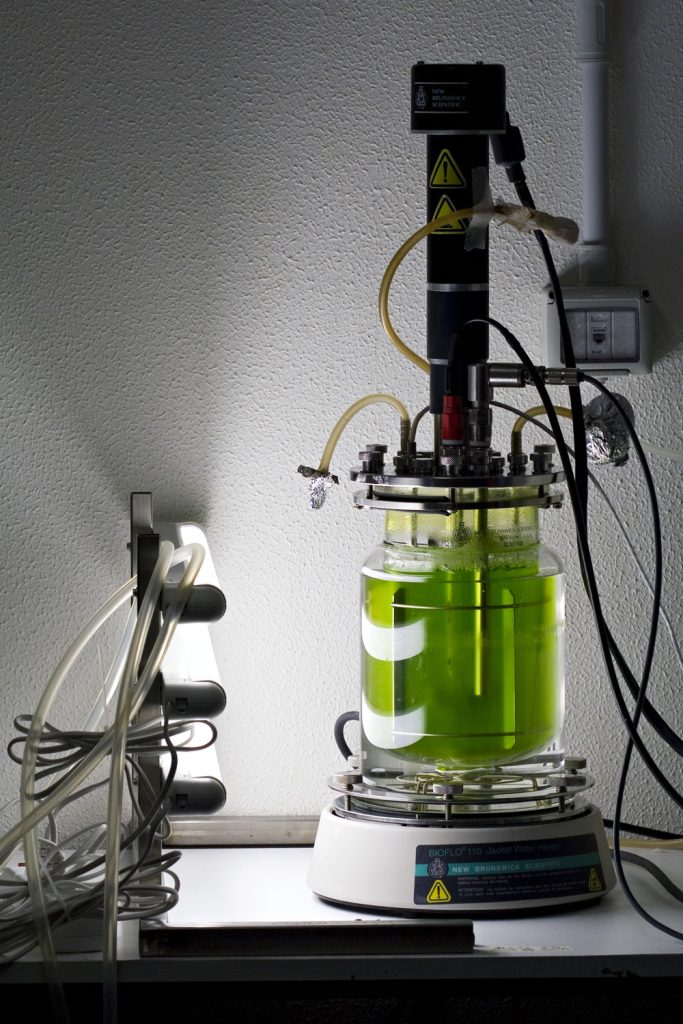
Regulators evaluate manufacturing information as part of the evidence supporting a product. If a process changes, manufacturers may need comparability evidence demonstrating that the altered process still makes a suitable product. This is a recurring theme in biotechnology: the biological design is only the start, while reproducibility turns the design into a dependable product. Our article on bioreactors explores a different manufacturing platform with a similarly demanding relationship between process conditions and product quality.
A release decision depends on several independent checks:
- Identity: verify that the RNA sequence and formulation correspond to the intended product.
- Purity and integrity: assess impurities and whether the RNA remains sufficiently intact.
- Delivery characteristics: test properties of the lipid nanoparticles, including size distribution.
- Microbiological quality: verify manufacturing controls and applicable sterility or bioburden specifications.
Exact tests and limits depend on the product, manufacturing process, and regulatory requirements.
What the platform changes—and what it does not
An mRNA platform can shorten some early development steps because the manufacturing route can be adapted to encode a different antigen. It does not remove the need to select an appropriate target, evaluate the immune response, study safety, and validate production. The molecules are transient instructions, but the manufacturing controls are long-lived commitments. That combination is what makes mRNA vaccines a biotechnology story: success requires molecular biology, delivery science, manufacturing engineering, and careful clinical evidence, each answering a different question.
References and further reading
Featured image: U.S. Air Force / Madeline Herzog · U.S. public domain.