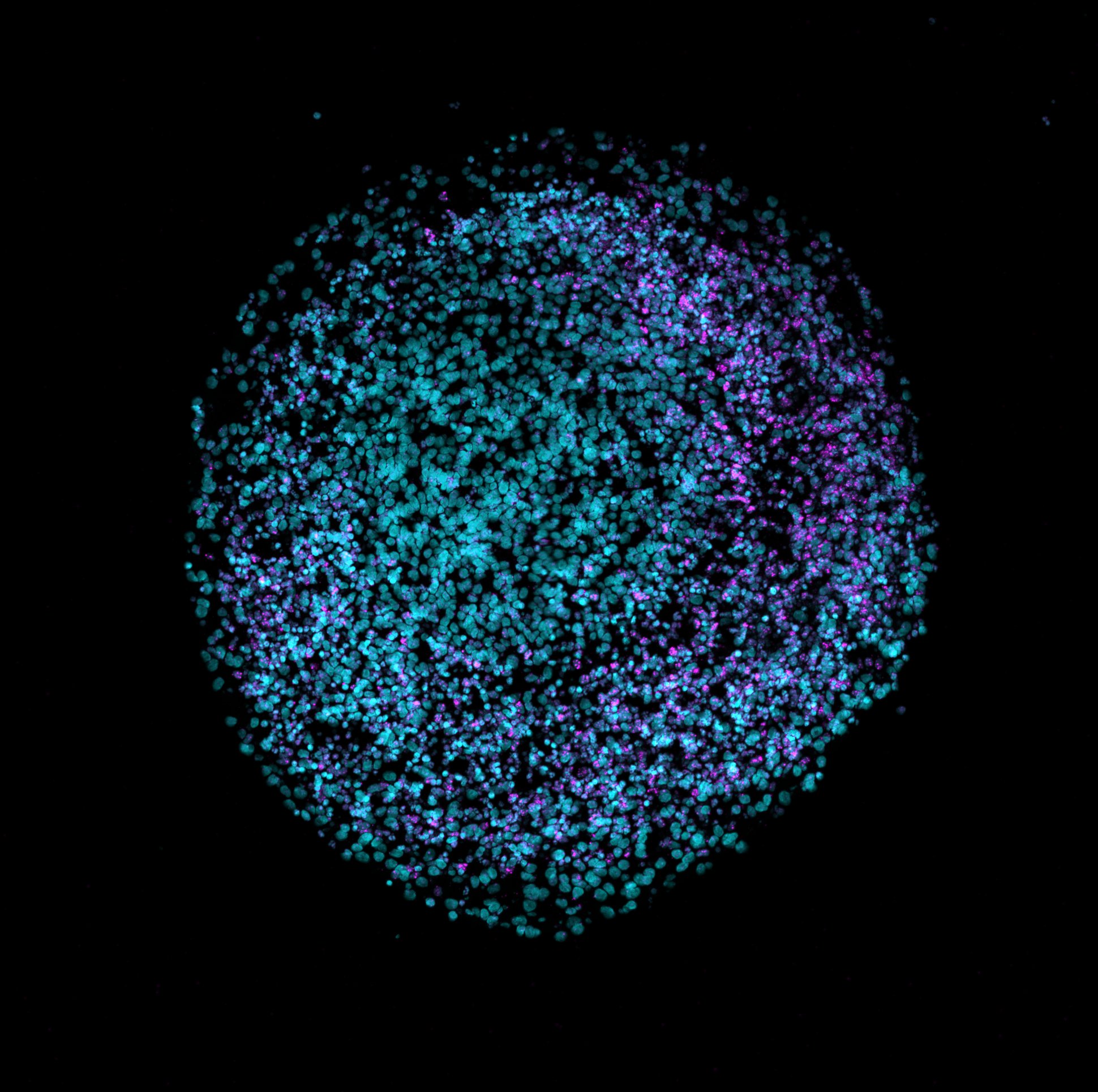
A small cluster of stem cells can sometimes organize into a structure that resembles selected features of an organ. In the laboratory, these three-dimensional cultures are called organoids. They are not miniature, fully functioning human organs. Their value lies in the way cells can assemble recognizable tissue arrangements, develop specialized cell types, and respond to biological signals that are difficult to reproduce in a flat layer of culture cells.
From a stem cell to a tissue-like structure
Researchers generate organoids using several kinds of starting material. Adult tissue stem cells can be collected from an organ and maintained under suitable conditions. Pluripotent stem cells, including induced pluripotent stem cells, can be directed through developmental steps toward a chosen tissue identity. The route affects what the resulting model can represent. An organoid grown from an intestinal stem-cell population is not produced by the same sequence of decisions as one derived from pluripotent cells to model aspects of early brain development.
Cells do not self-organize simply because they are placed in a three-dimensional dish. They respond to chemical signals, neighboring cells, mechanical properties, and the material around them. Growth factors can favor particular developmental programs, while extracellular matrix components provide physical attachment and biochemical cues. The culture system creates conditions under which cells can build aspects of tissue architecture. That is a powerful effect, but it does not mean that every developmental process occurring in the body is faithfully recreated.
Why the matrix is part of the experiment
Many organoid methods use a gel-like matrix that surrounds or supports the cells. The matrix influences cell shape, polarity, movement, and access to signaling molecules. Some commonly used matrices come from biologically derived materials with complex and incompletely defined compositions. This creates a reproducibility problem: one batch of matrix may not behave exactly like another. Researchers increasingly investigate defined synthetic or hybrid hydrogels, whose stiffness and chemical composition can be adjusted more systematically.
The physical environment matters as much as the recipe of soluble growth factors. A matrix that is too stiff may restrict changes in shape, while one that is too soft may fail to support a desired structure. The timing of exposure to particular signals also changes development. Describing organoid formation as ‘growing an organ in a dish’ erases these experimental controls. The researchers are shaping a developmental environment, then testing what structure and behavior emerge.
What can an organoid actually reproduce?
An intestinal organoid may form an epithelial lining with several relevant cell types and a lumen. A brain organoid may reproduce selected aspects of early neural tissue organization and neuronal differentiation. A liver-related organoid may express some metabolic functions or cell markers associated with liver tissue. In each case, similarity has to be measured in specific ways: cell identity, gene expression, microscopic organization, biochemical activity, and response to interventions. The name of an organ in the label does not prove equivalence to the organ in a living body.
Researchers often compare organoid cells with reference tissue using single-cell RNA sequencing, microscopy, and functional measurements. The comparisons reveal both successes and gaps. A model may contain the right broad cell lineages but lack their mature behavior. Another may respond appropriately to one signaling molecule while missing an important cell type. What makes an organoid useful is not perfect resemblance, which is rarely achieved, but a clear account of what the model can and cannot test.
| Useful strength | Important limitation |
|---|---|
| Some tissue-specific cell types and local organization | Often lacks the full vascular, immune and neural environment |
| Repeated observation under controlled lab conditions | Growth and maturity vary between lines and batches |
| Models of particular disease mechanisms | Not a substitute for clinical evidence in a complete organism |
The problem of oxygen and blood vessels
Natural organs are supplied by vascular systems that deliver oxygen and nutrients and remove wastes. Many organoids lack fully developed, perfusable blood vessels. As they grow, cells near the surface can receive nutrients more readily than cells at the center. Larger structures may develop stressed or dying central regions because diffusion has limits. This is a physical constraint, not merely an inconvenience that researchers can solve by adding more growth medium to the dish.
Scientists have explored spinning cultures, flow-based devices, slicing methods, co-cultures, and approaches that encourage vascular-like networks. Each can improve particular features, but none converts every organoid into a complete organ. Some strategies add considerable technical complexity and introduce new variables. A study that claims improved growth should specify whether it measured size, viable cell number, maturation, spatial organization, or actual physiological function. Those outcomes are not interchangeable.
Using organoids to study disease
Patient-derived organoids can preserve some biological features of the tissues from which they came. In cancer research, tumor-derived cultures may allow investigators to study differences in response to compounds under defined laboratory conditions. Genetic engineering can create organoid models with a particular variant, helping researchers ask whether that variant changes a measurable process. Disease modeling is strongest when the model’s limitations are considered alongside its apparent resemblance to human tissue.
An organoid response does not by itself establish that a treatment will work in a patient. The body adds drug absorption, circulation, metabolism, immune responses, and interactions between organs. Some organoid systems deliberately introduce immune or stromal cells to address particular gaps, but these remain partial reconstructions. Researchers often use organoids alongside cell lines, animal models, molecular analyses, and clinical evidence—not as a universal replacement for every other method.
Reproducibility is the central challenge
One organoid may be larger or differently organized than the next, even when they began from similar cells. Variability can come from cell state, matrix composition, growth-factor exposure, geometry, and time in culture. Researchers must decide which differences reflect meaningful biology and which are uncontrolled experimental noise. They may standardize starting cell numbers, use defined media, image structures over time, and apply acceptance criteria before analyzing results.
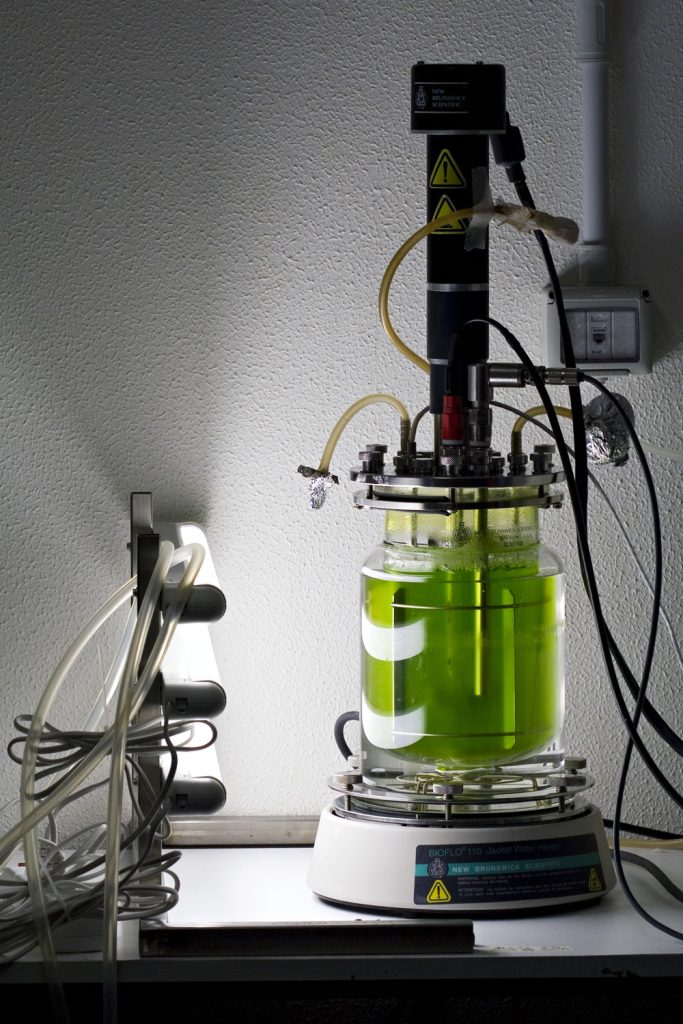
This quality-control mindset is closely related to the engineering considerations discussed in What Happens Inside a Bioreactor?. Both approaches require investigators to connect process conditions with biological behavior. Organoids place special emphasis on self-organization and tissue context, whereas many bioreactor processes aim for controlled expansion or production. Combining them can be useful, but doing so creates new measurement and scale-up questions rather than removing the old ones.
How to read an organoid research claim
When a headline says scientists have grown a brain, kidney, or gut in the laboratory, ask what cell types were present and how the researchers tested their function. Was the model derived from adult stem cells or reprogrammed cells? Did it include blood vessels, immune cells, or nerves? Was the reported improvement reproduced across independent batches? These questions are not objections to the technology. They are the basis for appreciating its real achievements without attributing to the model functions it does not have.
Organoids are powerful because they occupy a middle ground between overly simplified cultures and the complexity of an intact organism. They can bring selected developmental and disease processes into an observable experimental system. The most valuable results are those that describe that middle ground precisely: what the cells did, what the model included, what it lacked, and what future experiments must still establish. For a related look at how researchers deliberately change cells, see Building Biology: The Work of Synthetic Biology.