Blood passes through the kidneys again and again throughout the day. At first glance, these organs seem like filters that remove unwanted material. But a filter alone would discard too much. The kidneys must retrieve valuable substances, adjust salt and water levels, and regulate chemical conditions within remarkably narrow limits.
Inside a nephron
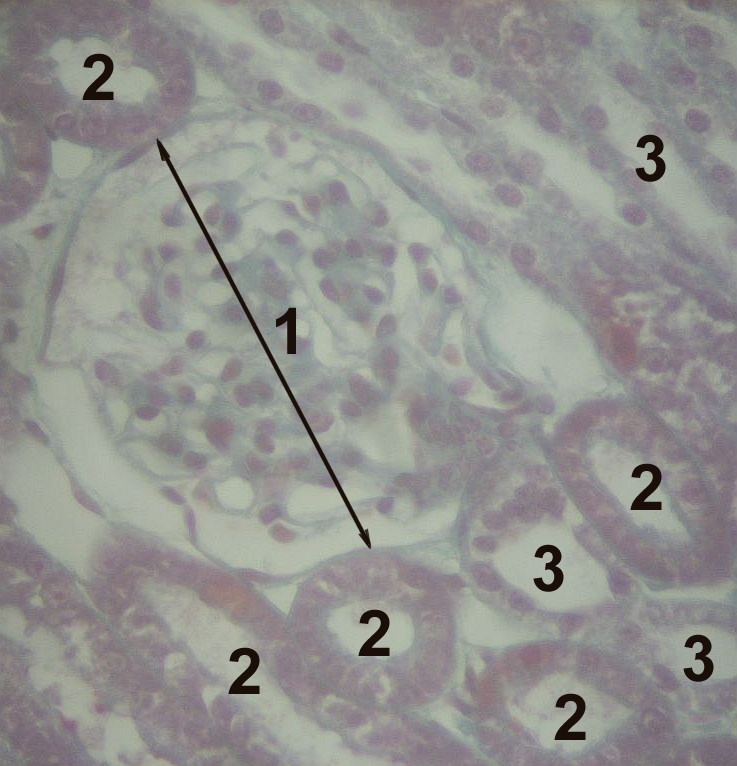
Each kidney contains many small functional units called nephrons. Blood enters a cluster of tiny capillaries known as the glomerulus, where pressure drives water and small dissolved substances into a surrounding capsule. Blood cells and most large proteins normally remain in the circulation.
The resulting filtrate is not urine. It contains water, ions, glucose, urea and numerous other small molecules. As it travels through the renal tubule, its composition changes dramatically.
Reabsorbing what the body needs
The proximal tubule retrieves much of the filtered sodium and water, along with most glucose and amino acids under normal conditions. Cells lining the tubule rely on transport proteins and energy-dependent ion gradients. Some substances move between cells or across membranes in response to chemical and osmotic conditions.
This filtering process also connects directly to the acid-base chemistry described in Why pH Matters in Biology.
Later nephron segments make finer adjustments. The loop of Henle helps establish concentration gradients in the kidney’s inner region. The distal tubule and collecting duct participate in regulating electrolytes and the final volume of water that leaves the body.
Hormones and water balance
Antidiuretic hormone, also called vasopressin, changes the collecting duct’s permeability to water. When the body needs to conserve water, this signaling system can increase water reabsorption and allow more concentrated urine to form. Aldosterone influences sodium reabsorption and potassium secretion in parts of the distal nephron.
These are components of larger feedback systems involving blood pressure, circulating volume and the concentration of dissolved substances. The kidneys respond to signals and also help generate them.
Acid–base regulation
Normal metabolism produces acids, and blood pH must remain within a narrow physiological range. The lungs help by regulating carbon dioxide, while the kidneys adjust bicarbonate handling and the excretion of acid. Renal responses operate over a different time scale from changes in breathing.
This partnership illustrates why body systems should not be studied as completely separate machines. Kidney physiology is connected to respiration, circulation, endocrine signaling and cellular metabolism.
The kidney as a blood-pressure organ
Why a filtration estimate is not the same as a diagnosis
Creatinine is a small waste product released during normal muscle metabolism. Clinicians can use a blood creatinine measurement, together with age and other variables, to estimate glomerular filtration rate. Yet creatinine is influenced by muscle mass and can change for reasons other than permanent damage to a kidney. A measured decline must be interpreted alongside the person’s clinical history, previous results, urine findings and the timing of the change. Filtration is only one part of renal function: a person may also have disturbances of potassium, sodium or acid–base balance. A discussion of “kidney health” that reduces all these jobs to a single filtration number misses much of the physiology. This article describes the mechanisms; individual test interpretation belongs with a qualified clinician, especially when an abnormal result is new or accompanied by symptoms.
Kidney function is tied closely to blood pressure. Reduced blood flow to parts of the kidney can stimulate renin release and activate the renin–angiotensin–aldosterone system. The resulting cascade affects blood vessels and the handling of sodium and water. This is one way the kidneys contribute to longer-term regulation of circulation.
The relationship runs in both directions: the kidneys help regulate pressure, and changes in pressure can alter renal filtration and damage delicate blood vessels over time. A discussion of cardiovascular physiology is incomplete without this connection.
Why urine can be dilute or concentrated
The kidney’s ability to vary urine concentration depends on the organization of the loop of Henle, nearby blood vessels and collecting ducts. Transport of salt and movement of water establish and preserve gradients within the renal medulla. As filtrate passes through the collecting duct, hormonal signals help determine how much water follows those gradients back into the circulation.
Different animals have different abilities to conserve water. Comparative physiology shows that nephron structure and habitat are related, although no one anatomical feature explains every species’ strategy. The human kidney is one version of a broader biological solution to the problem of regulating fluid and dissolved substances.
A useful filtration calculation
An adult glomerular filtration rate is often discussed around 90–120 milliliters per minute in healthy younger adults, though values vary with body size and circumstances. A rate of 100 milliliters per minute corresponds to roughly 144 liters of filtrate in a day. That is far more than the volume of urine normally passed. The difference exists because tubules reclaim most filtered water and many dissolved substances before the remaining fluid leaves the body. This worked example helps separate filtration from excretion: a substance can be freely filtered and yet appear in little final urine if nearly all of it is reabsorbed. [1]
Why a laboratory number needs context
Creatinine in blood is often used to estimate filtration because it is produced continuously by muscle metabolism and cleared substantially by the kidneys. An estimated glomerular filtration rate is still a calculation, not a direct photograph of nephron performance. Muscle mass, age, certain medications and acute changes in kidney function can affect interpretation. Urine albumin provides different information, sometimes revealing damage even when filtration is relatively preserved. These tests describe related but non-identical aspects of renal function, which is why clinicians interpret patterns and trends rather than one isolated figure.
What happens to glucose after filtration
Blood entering a healthy glomerulus contains glucose as well as electrolytes, waste products and many other small molecules. Much of that dissolved glucose enters the initial filtrate. A healthy kidney does not normally excrete most of this glucose, because transport proteins in the proximal tubule move it back into the bloodstream. This is a useful example of why filtration and excretion should never be treated as synonyms. A substance can be filtered in a large amount and then almost completely reabsorbed. The tubular cells expend energy to maintain ion gradients that help drive coupled transport. Transport has limits, however: when filtered glucose loads are high enough, more glucose may appear in urine. The example makes the larger point that kidney function depends on coordinated processes in different nephron regions, not on a single filter. Fluid composition changes repeatedly between the glomerulus and the collecting system.
References
- Anatomy and Physiology 2e
- Physiology of urine formation
- OpenStax: Kidney tubular reabsorption and hormone regulation
Featured image: Uwe Gille, CC BY-SA 2.5. Actual kidney histology