A child has a particular eye color, an aunt has the same distinctive hair texture, and two cousins have a similar tendency to develop asthma. Family resemblance is easy to notice. Explaining it is harder. Some traits follow the inheritance of a particular gene variant closely; others involve many genes, environmental exposures, chance, and shared habits. A family pattern is useful evidence, but it is not proof of a single genetic cause.
To make sense of such patterns, geneticists ask several different questions. Which biological feature is being measured? Is there a plausible molecular mechanism? Does the trait appear in predictable combinations across generations? And could shared living conditions explain at least part of the similarity? Those questions matter more than simply declaring a trait “dominant” or “recessive.”
What children actually inherit
Most human body cells have two copies of each autosomal chromosome, one inherited from each biological parent. At a particular location on a chromosome, or locus, a person can therefore carry two versions of a gene, called alleles. During the production of eggs or sperm, meiosis distributes one copy of each chromosome into a reproductive cell. Fertilization combines one set from each parent.
This is the foundation of Mendelian inheritance. But “a gene for” a trait can be misleading. Genes often encode proteins or functional RNA molecules that participate in pathways, and their effects depend on other cellular components. Variants may change a protein’s structure, alter the amount made, or have no detectable consequence. The relationship between a DNA sequence and a visible characteristic is a chain of biological events, not a label printed directly onto the body.
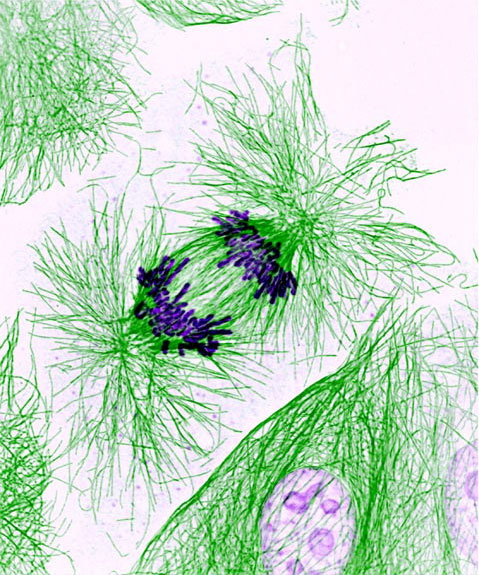
Even siblings with the same parents generally inherit different combinations of genetic material. During meiosis, chromosome pairs segregate, and recombination exchanges segments between corresponding chromosomes. Unless siblings are genetically identical twins, each receives a distinct mixture. The origins of those combinations connect inheritance to DNA copying and the chromosome behavior described in When Chromosomes Change, although replication and recombination are different processes.
A worked example: two carriers of a recessive condition
Cystic fibrosis provides a useful example of an autosomal recessive pattern. A person generally develops the condition when both copies of the CFTR gene carry disease-causing variants. Someone with one disease-causing copy and one functioning copy is typically an unaffected carrier, although the biology can be more complex for particular variants.
Suppose two parents are each carriers, and use A to represent a functioning copy and a to represent a disease-causing copy for this simplified example. Each parent can pass A or a. The four equally likely combinations for each pregnancy are AA, Aa, aA, and aa. Thus the model gives a 25% chance of a child with two disease-causing copies, a 50% chance of a carrier child, and a 25% chance of a child with neither of those disease-causing copies.
Those percentages apply to each pregnancy independently under the model, not to the eventual mix of children in a particular family. Four children do not have to include exactly one affected child. Nor does a two-letter square describe all variants in CFTR, the full range of clinical severity, or the factors that influence a person’s health. It is a probability model, not a diagnosis.
Autosomal dominant inheritance follows a different rule. For some conditions, one particular altered copy can be enough to increase the chance of a phenotype. A heterozygous parent can then have a 50% chance of passing the variant to each child. But even there, inheriting a variant is not always equivalent to showing the same signs, at the same age, or with the same severity as another relative.
Why “dominant” does not mean stronger or more common
Dominance describes a relationship between allele effects for a specified phenotype. It does not tell us that a variant is healthier, more powerful, more evolutionarily successful, or more frequent in a population. A dominant allele can be rare, and a recessive allele can be common. The everyday use of the word “dominant” often creates confusion because geneticists mean something more precise.
Dominance is also phenotype-dependent. One genetic variant can influence several characteristics, and its effects may not follow the same simplified description for each. Some traits show incomplete dominance or codominance; in others, the phenotype reflects complex interactions among genes and regulatory sequences. For human characteristics such as adult height or susceptibility to common conditions, a single two-by-two Punnett square is usually the wrong tool.
The many-gene traits that make families resemble one another
Height is a clear example of a polygenic trait. Many genomic regions contribute small effects, while childhood nutrition, illness, and other environmental circumstances also matter. If several close relatives are tall, it is reasonable to suspect inherited contributions. It would be unreasonable to conclude that one single allele guarantees a tall child. Eye color, once taught as a single dominant-versus-recessive example, also involves multiple genetic influences.
Some health conditions are multifactorial. A family history of type 2 diabetes or cardiovascular disease can reflect inherited susceptibility alongside overlapping diets, activity patterns, socioeconomic circumstances, and exposures. Family members may share routines as well as chromosomes. This is why family history can help clinicians assess risk, but it does not identify a precise molecular cause by itself. A risk estimate is not an individual destiny.
Genetic epidemiologists sometimes estimate heritability, which describes how much of the variation in a measured trait across a particular population and environment is associated with genetic differences. A heritability estimate of 0.7 does not mean that 70% of one person’s characteristic was caused by genes. It refers to variation among individuals in the studied population. Heritability can change when the environment or the population changes; it is not a fixed property of a trait everywhere.
When the same variant gives different results
Two concepts explain why relatives who share a known genetic variant may look or feel different. Reduced penetrance means that some people who carry a particular variant do not develop the associated observable condition. Variable expressivity means that people who do show the condition may differ in its manifestations or severity. Those are separate ideas: one concerns whether a phenotype occurs, and the other concerns what it looks like when it does.
MedlinePlus Genetics uses Marfan syndrome to illustrate variable expressivity: people with disease-associated FBN1 variants may share a diagnosis while experiencing substantially different effects on connective tissue and the cardiovascular system. Penetrance also matters in some inherited cancer-susceptibility syndromes, where a variant can increase lifetime risk without ensuring that cancer will develop. These examples are especially important because genetic information is probabilistic and context-dependent.
Age can further complicate a family pattern. A condition that tends to develop later may appear absent in a younger carrier. Testing methods, incomplete family histories, unrelated health problems, and small family size can also obscure a pattern. A pedigree is useful, but interpreting it responsibly requires attention to what has actually been observed and what remains uncertain.
Not all inheritance travels through autosomes
Sex-linked patterns involve genes on the X or Y chromosomes. For some X-linked recessive conditions, people with one X chromosome can be more likely to show the phenotype when that chromosome carries a relevant variant. In families with two X chromosomes, different cellular expression and X-inactivation patterns can contribute to variability. Phrases such as “only boys get this condition” are therefore often too categorical and can overlook affected individuals with other chromosomal arrangements.
Mitochondrial DNA has a different inheritance pattern: in humans it is ordinarily transmitted through the egg. The proportion of altered mitochondrial DNA can vary among cells and tissues, contributing to differences in clinical manifestations. Genomic imprinting adds another layer for some genes because expression depends on whether the allele was inherited from the mother or the father. These are not exceptions that invalidate genetics; they are reasons to match the inheritance model to the biology being studied.
What a family pattern can—and cannot—tell you
A useful family history records which relatives have a particular diagnosis or characteristic, approximate ages at which signs developed, and whether the information is confirmed or secondhand. Three generations are often recommended for clinical family-health histories. Patterns may help a qualified professional decide whether further evaluation would be useful. They do not support confident self-diagnosis, and an absent family history does not necessarily exclude inherited risk.
Genetic tests likewise answer specific questions, not every question about a person’s future. A targeted test may look for a particular variant; other approaches examine panels of genes or more extensive portions of a genome. A negative result can mean no tested variant was found rather than proving there is no genetic contribution. Incidental findings and variants of uncertain significance require careful interpretation, ideally with appropriate genetic counseling when health decisions are involved.
The most useful way to describe inheritance is therefore modest but precise: relatives share genetic material, which can influence biological pathways and patterns of resemblance, while environment, development, and chance shape how those influences appear. A family resemblance is a clue. The explanation lies in the particular mechanism—and sometimes in several mechanisms working together.
References and further reading
- MedlinePlus Genetics — Patterns of Inheritance.
- MedlinePlus Genetics — Cystic Fibrosis, for the CFTR example.
- MedlinePlus Genetics — Penetrance and Variable Expressivity.
- MedlinePlus Genetics — What Is Heritability?.
- MedlinePlus Genetics — Complex Disorders.
- MedlinePlus Genetics — Family Health History.
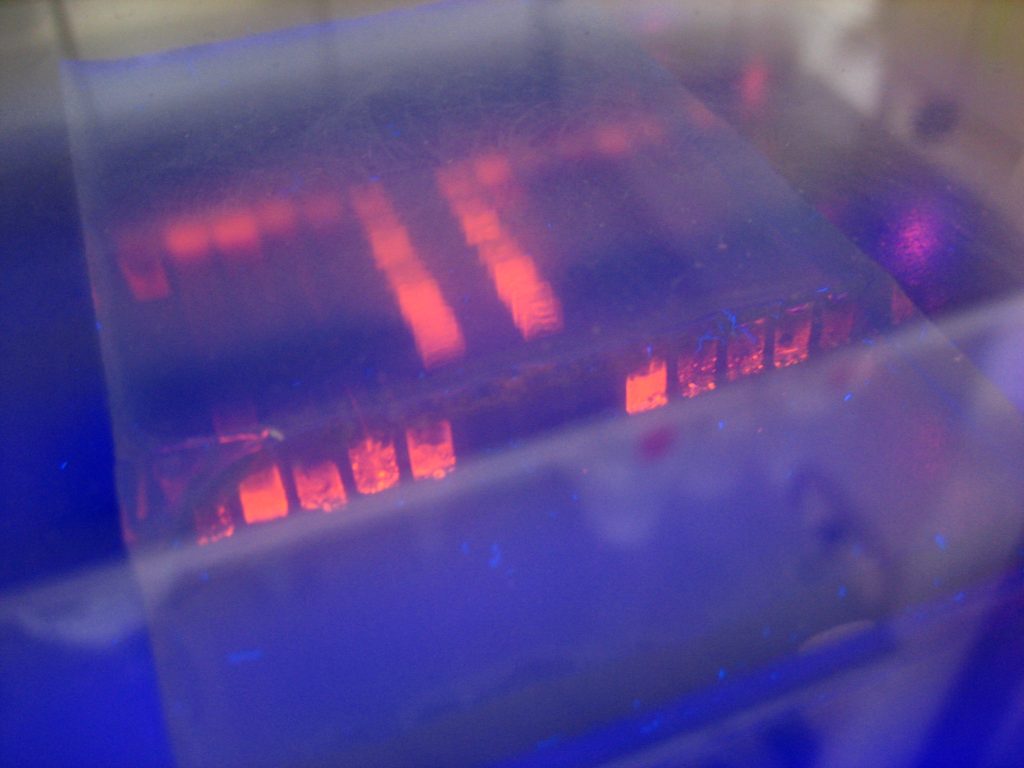
Featured image: School of Natural Resources, Ann Arbor, CC BY 2.0. Illustrates genetic analysis, not inherited traits directly