A drop of pond water can contain an enormous number of viruses that never infect human cells. Many are bacteriophages, viruses that infect bacteria. They are easily overlooked in descriptions of microbial communities, yet they can kill bacterial cells, move DNA between lineages, and influence which bacteria thrive. A bacterium’s neighbors are only part of its environment; the viruses that recognize its surface can be just as consequential.
A phage has to find the right host
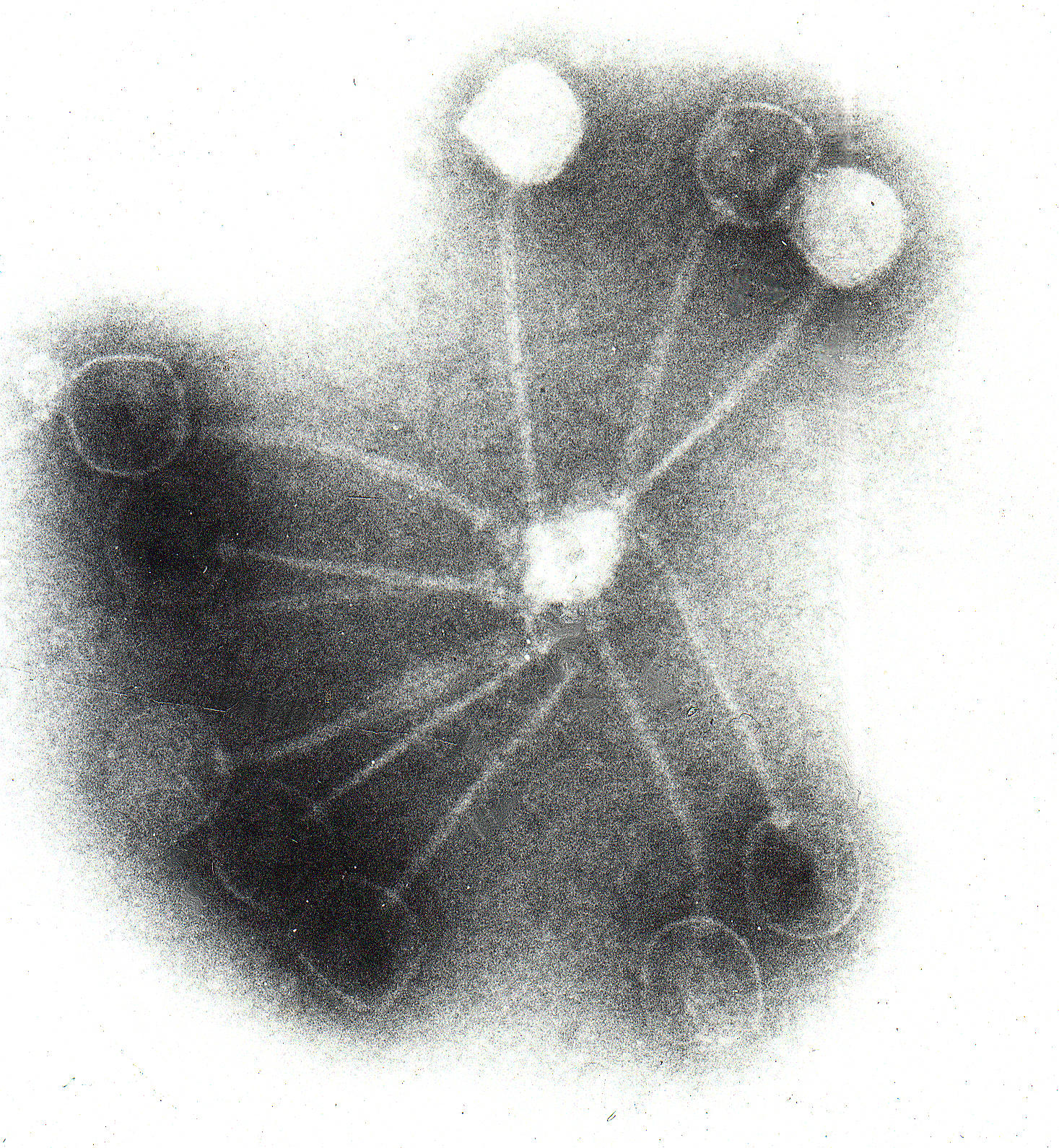
Bacteriophages vary enormously in shape and genome type. Some familiar textbook images show a geometric head attached to a tail and tail fibers, but that design is not universal. What phages share is a dependence on bacterial host cells for reproduction. A phage particle encounters a bacterium, recognizes suitable surface structures, and delivers its genetic material through a mechanism determined by the phage’s biology. Host range can be narrow: a virus that infects one bacterial strain may fail to infect a close relative.
Receptors create an evolutionary negotiation. A bacterial surface molecule might normally help with nutrient uptake or attachment, while also providing a binding site for a phage. A change that prevents phage attachment can be protective, but it may impair the molecule’s original task. The virus, meanwhile, can evolve new recognition properties. This back-and-forth helps explain why phage–host relationships are dynamic instead of being a permanent list of winners and losers.
What happens in a lytic infection?
In a lytic cycle, the phage uses the host’s machinery and resources to produce viral components. Its genome is replicated, viral proteins are synthesized, and new particles are assembled. Many lytic phages ultimately rupture the bacterial cell by expressing proteins that damage the cell envelope. Newly released phages can then encounter other susceptible cells. The timescale and number of particles produced differ across phage–host combinations and growth conditions, so familiar classroom numbers should not be applied to all phages.
Lysis has consequences beyond killing one cell. When a bacterial cell ruptures, organic matter and nutrients are released into its environment. In aquatic systems, phage-mediated mortality can redirect material away from larger organisms and back toward microbial recycling. In a laboratory culture, repeated cycles of infection may produce a decline in bacterial density followed by recovery of resistant survivors. That recovery is not evidence that the virus has vanished; resistant hosts and altered phages can coexist in a changing population.
Temperate phages follow another route
Not every infection ends immediately with cell rupture. Some phages can enter a state called lysogeny, in which their genetic material is maintained within the host lineage. In many systems the phage DNA integrates into a bacterial chromosome as a prophage, although other maintenance strategies occur. The bacterial cell reproduces and carries the prophage with it. Under certain conditions, a temperate phage may leave this state and enter productive replication, which can culminate in lysis.
Lysogeny complicates the idea that every phage is simply a bacterial predator. A prophage can affect the host’s gene expression or contribute new functions. In certain well-studied pathogens, genes carried by phages influence traits relevant to disease. The details are organism-specific, and phage carriage should never be treated as automatic evidence of increased virulence. Researchers must identify the genes involved and show what they do in the bacterial host.
| Feature | Lytic infection | Lysogenic route |
|---|---|---|
| Viral genome | Replicated as new particles are assembled | Maintained in the bacterial lineage, often as a prophage |
| Immediate outcome | Host cell may lyse and release phages | Cell can continue dividing without immediate lysis |
| Later possibility | Released particles infect other suitable hosts | Some prophages can enter a productive cycle following induction |
Viruses can move bacterial DNA
Phages sometimes package or transport bacterial DNA as part of a process called transduction. That can transfer genetic information from one bacterium to another. Different phage systems support different routes of transfer, and most phage infections do not result in successful movement of a useful gene. Nevertheless, transduction is an important route of horizontal gene transfer alongside transformation and conjugation. Its existence means that bacterial evolution cannot be described by mutation and cell division alone.
This has particular relevance to antibiotic resistance. Resistance genes can spread by several mechanisms, including mobile genetic elements. A phage’s role must be demonstrated rather than presumed whenever resistance spreads between isolates. Genomic sequences can suggest historical transfers, but experiments are often needed to show that a particular virus can move a particular piece of DNA under realistic conditions.
Why microbial communities keep changing
Imagine a bacterial community containing several strains with different phage receptors. A phage that infects the commonest susceptible strain may reduce its abundance, opening space for strains that were formerly less common. Those survivors may differ in nutrient use, growth rate, or interactions with neighboring organisms. A second phage might affect a different strain. The resulting community can fluctuate through selection, ecological competition, migration, and chance. It is not simply a sequence of phage outbreaks with a return to the original balance afterward.
The human gut offers an especially complicated setting because phages interact with bacterial populations embedded in a changing environment. Diet, medication, host immunity, and microbial competition are all relevant. Detecting phage DNA in a stool sample does not automatically establish what that phage is doing at that moment. Sequencing can reveal presence and diversity, but determining active infection may require additional experiments and measurements of the bacterial hosts.
How scientists actually study phages
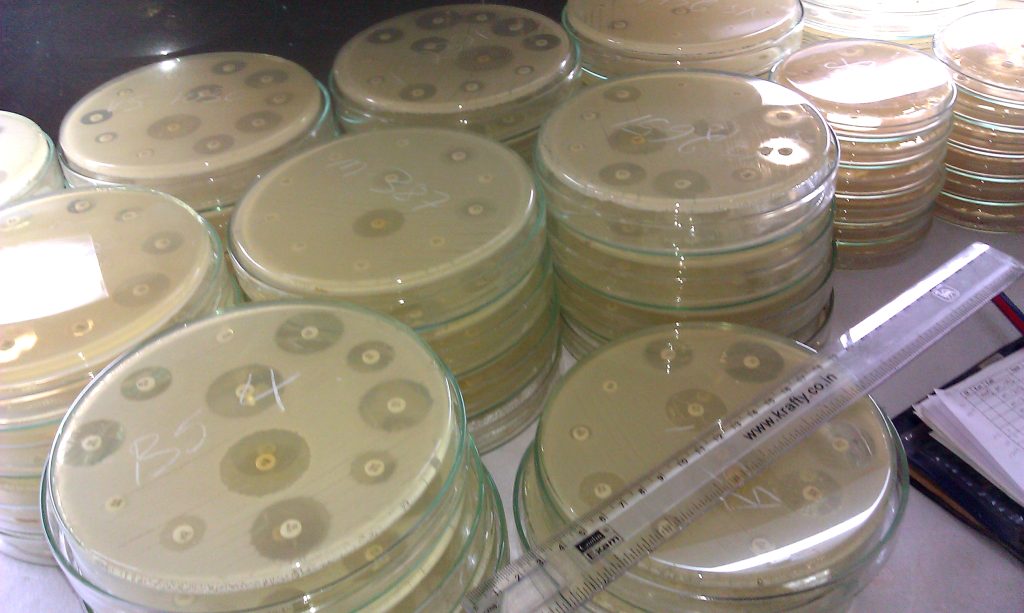
A classic plaque assay mixes phages with a susceptible bacterial lawn. Local infections can produce clear or cloudy zones called plaques, each arising from infectious events under suitable conditions. Researchers use plaque counts to estimate infectious particles, but plaque appearance depends on host growth, phage biology, and the conditions of the assay. Sequencing identifies phage genomes and predicted genes. Electron microscopy reveals certain structural details, while time-series experiments track changes in bacteria and phage abundance.
A particularly powerful experiment follows coevolution. Scientists maintain bacterial and phage populations together, sample them over generations, and test old and new hosts against old and new viruses. This can show whether resistance evolved in bacteria and whether phages later overcame it. But laboratory conditions simplify the ecology. A result from a flask does not automatically predict the outcome in a soil community, a person’s gut, or a clinical infection.
What about phage therapy?
Researchers and clinicians are interested in using selected phages against difficult bacterial infections. Their host specificity is attractive, but it also creates a challenge: the phage must act against the relevant strain. Bacteria can become phage resistant, immune responses and delivery conditions may affect treatment, and a preparation must be well characterized. Research, clinical trials, and specialized treatment programs are evaluating these questions. Phages are not interchangeable with antibiotics, and their use is not a do-it-yourself intervention.
The more general lesson reaches beyond treatment. Bacteriophages are part of the ecology and evolution of bacteria. They influence mortality, genetic exchange, and the structure of communities—sometimes over short timescales. When reading about bacterial shape, signaling, or a biofilm, it is worth remembering that bacteria live in a world where invisible viruses are constantly exerting pressure on what survives.
References and further reading
- Gut Bacteriophage: Current Understanding and Challenges
- A Century of Bacteriophages: Insights and Applications
Featured image: Dr Graham Beards · CC BY-SA 4.0.