A bacterium has no ears, but it can detect signs that other bacteria are nearby. Many species release small signaling molecules into their surroundings and respond when enough of those molecules accumulate. This process, called quorum sensing, can help coordinate behavior across a population.
Different bacteria, different languages
Gram-negative bacteria often use small molecules such as acyl-homoserine lactones, though many other signals exist. Some Gram-positive species use short peptides that interact with membrane receptors. There are also signaling systems capable of responding to compounds made by multiple species.
One setting in which microbial signalling becomes especially complicated is discussed in Why Biofilms Are So Hard to Remove.
These systems are not universal, and their molecular details vary widely. A signal recognized by one species may have little effect on another. It is therefore better to think of quorum sensing as a broad family of signaling mechanisms than a single bacterial language.
What changes when a signal is detected?
Depending on the organism, quorum sensing can influence production of enzymes, light emission, movement, uptake of genetic material or factors involved in interacting with a host. In the marine bacterium Aliivibrio fischeri, population-dependent regulation of bioluminescence is a classic example.
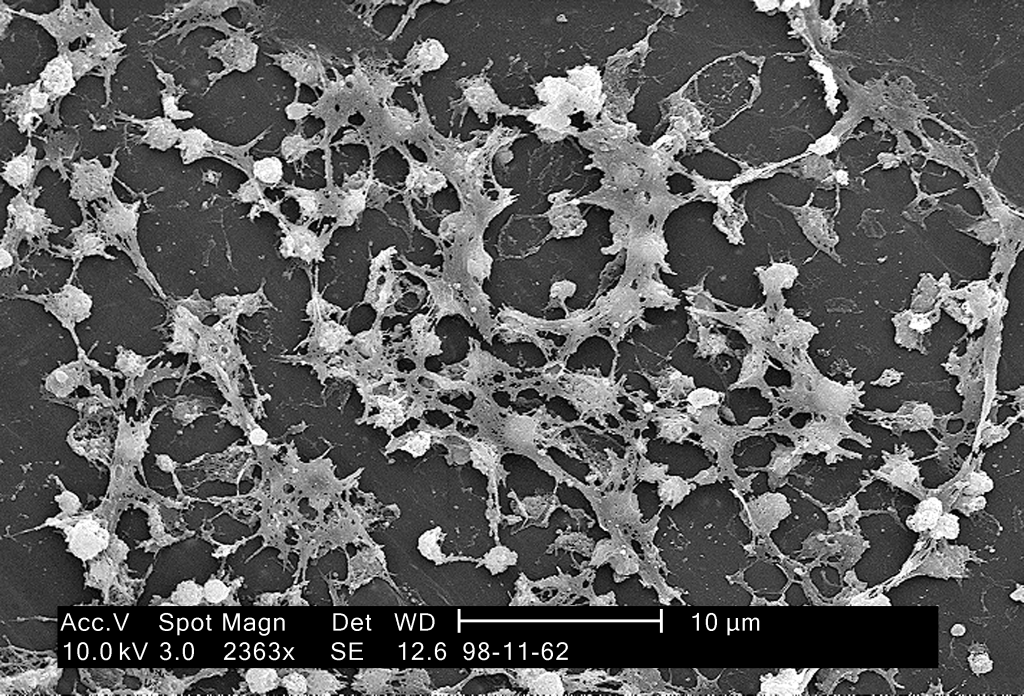
Some bacteria use quorum-sensing pathways while developing biofilms, the surface-associated communities found on teeth, pipes and many natural surfaces. But a biofilm is not merely the consequence of a quorum-sensing switch. Nutrients, surface chemistry, flow and other regulatory pathways also shape its growth.
Not every cell responds together
Measurements at the level of individual cells have also shown that members of the same population do not always respond identically. Differences in position, physiology and gene regulation can produce varied responses even when bacteria share a chemical environment. Quorum sensing is coordination, not perfect unanimity.
Seen this way, bacterial communication is less like a meeting in which everyone votes and more like an ongoing exchange of chemical information. Cells use it to adjust their behavior to a changing neighborhood.
How the idea is tested
A typical laboratory experiment might compare bacteria with and without a functioning signal receptor. Researchers can then add a signaling molecule back to the system and ask whether a particular gene or behavior changes. This type of comparison helps separate the effect of a signal from ordinary changes that accompany population growth.
Experiments can also use fluorescent reporter proteins to reveal the activity of a signal-responsive promoter. Under a microscope, the resulting pattern may show that cells in different parts of a community behave differently. That spatial information can be lost when a whole culture is blended into one measurement.
Communication and evolution
Signaling systems raise evolutionary questions. If some cells produce costly public goods while others benefit without contributing, the balance between cooperators and noncontributors may change over time. The outcome depends on how closely cells are related, how far products diffuse and the local environment.
An experiment that separates signaling from growth
One of the most useful controls in quorum-sensing research is to compare a normal strain with a mutant unable to make a particular signaling molecule. If the mutant loses a regulated behavior, researchers can add the purified signal back and test whether the behavior returns. A second mutant lacking the receptor may fail to respond even when the signal is supplied. Taken together, those results separate production of a molecule from detection of the same molecule. Measuring culture density as well as fluorescence or light output prevents a simpler explanation: that one culture merely grew faster. Signal concentration can also change with fluid flow, breakdown and diffusion, so a response threshold does not reveal an exact cell count. The LuxI–LuxR system described in the microbial primer on quorum sensing is a concrete example of the evidence scientists use to establish a signaling circuit.
These questions have turned quorum sensing into a subject that connects microbiology with ecology and evolutionary theory. The molecular components can be described in a diagram, but their function makes the most sense in the setting where bacteria actually live.
Signals do not mean conscious decisions
Quorum sensing is useful shorthand, but bacteria do not count their neighbors as people count attendance. Cells make or release molecules whose concentration depends on production, diffusion, breakdown and the surrounding environment. Receptors respond when enough signal reaches them. Dense populations may accumulate signals rapidly, while flowing water can remove them even when bacteria are abundant. This is why the same bacterial species may behave differently in a laboratory flask, a biofilm or a host tissue.
Different groups use different chemistry. Many gram-negative bacteria communicate with acyl-homoserine lactones, while certain gram-positive systems use peptide signals. The categories are not universal, and many species have multiple interacting circuits. Some signals influence genes within one species; others may be detected by organisms nearby. A signal can therefore convey information about more than population density, including the chemical setting in which cells find themselves.
Biofilms and collective behavior
One reason researchers study communication is its role in biofilms, communities attached to surfaces and embedded in material produced by the cells. Signaling can help coordinate traits associated with adhesion, extracellular substances and dispersal. But biofilm formation is not controlled by quorum sensing alone. Nutrients, oxygen, mechanical forces and the properties of a surface also matter. Treating every biofilm as the product of a single signaling switch obscures the complexity of microbial communities.
A measurable example: light-producing bacteria
Some marine Vibrio species regulate light production through small molecules called autoinducers. In suitable conditions, accumulating signals influence regulators of the genes required for bioluminescence. The pattern helped researchers recognize that population-linked responses can be chemically coordinated. Yet signal concentration is affected by more than the number of cells: fluid flow, diffusion, degradation and local geometry can all matter. Calling a response “quorum sensing” does not mean the bacteria literally count their neighbors. It identifies a regulatory network sensitive to signals whose concentrations often correlate with population and environment. [1]
Why blocking the signal is not a universal cure
A drug that disrupts one organism’s signaling pathway may have little effect on another species with different sensors or downstream genes. Even within a species, strains can vary. Some quorum-sensing systems regulate toxins, others regulate metabolic behavior, and some regulate production of public goods. Laboratory experiments commonly compare signal-deficient mutants with genetically restored strains, then measure a particular phenotype under defined conditions. That design is more persuasive than observing a change in growth after applying a chemical, because an apparent “communication blocker” might simply be toxic to cells.
References
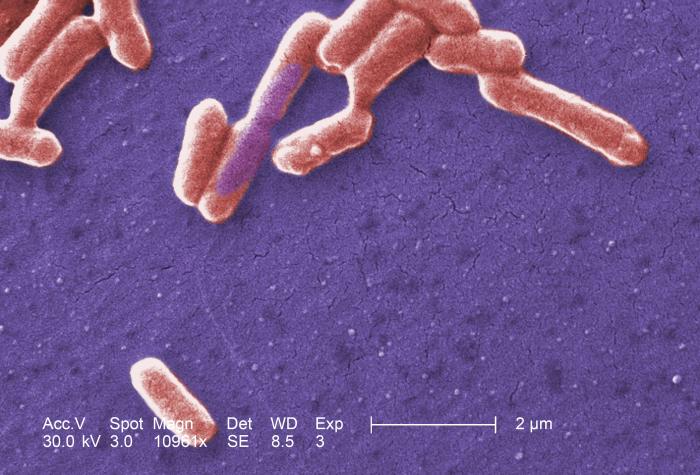
Featured image: Centers for Disease Control and Prevention, Public domain. The micrograph does not show signaling molecules